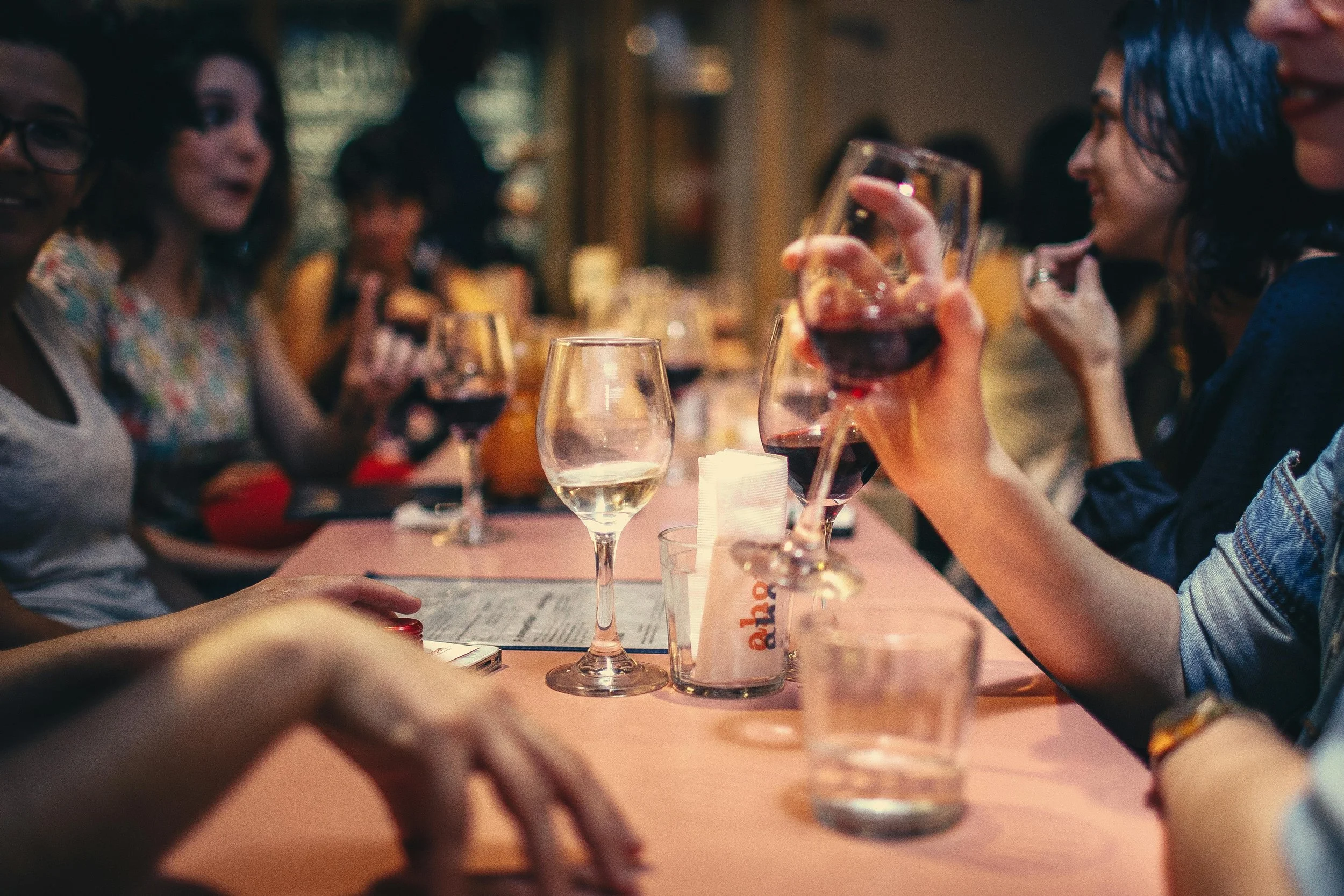

In San Francisco, first dates don't start with "What do you do?" They start with "What are you working on?"
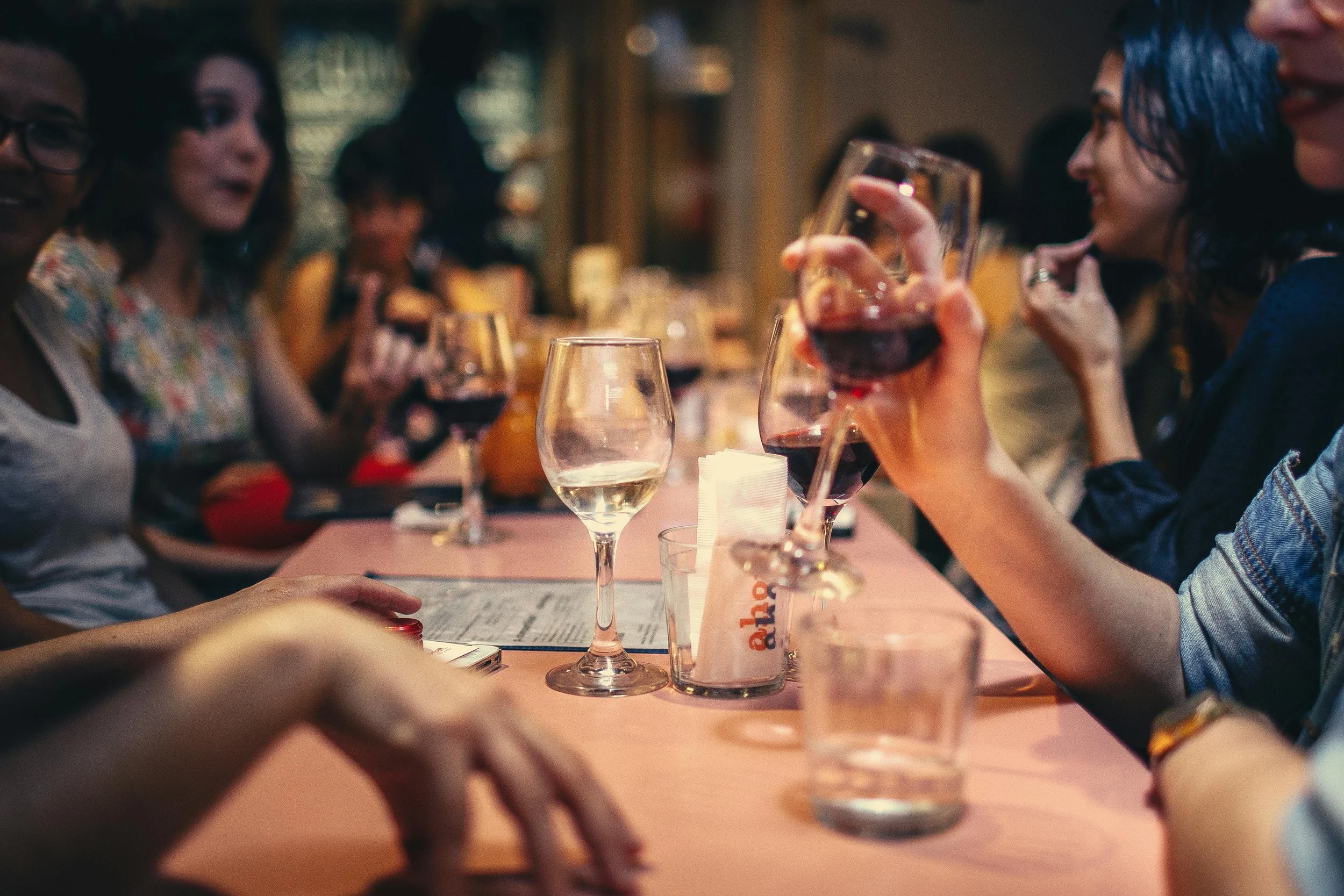
Then come the follow-ups. Is it AI? What stage? Who's funding it? Are you at one of the labs? Hayes Valley or the Mission? By the time the second drink arrives in NoPa, you've done a quick diligence pass on the person across from you, and learned very little about whether you'd enjoy seeing them again.
It's not a date. It's a first pitch meeting, with natural wine.
This guide looks at why San Francisco pushes professionals into work mode on dates, what the research says about fixing it, and how to have a first date that feels like a conversation rather than a product review.
The short answer
Why do first dates in San Francisco feel like job interviews? Because San Francisco's professional life is dominated by tech, startups and AI, where people are trained to evaluate ideas and people fast. That habit, plus a culture that likes to optimize everything, turns first dates into quick assessments of career, ambition and fit.
How do you stop? Skip "What are you working on?" as an opener, ask follow-up questions about what your date actually says, and share something real before asking for it in return. Research on speed dating found that people who asked more follow-up questions were more likely to get a second date.
Why San Francisco makes it worse
Three things about San Francisco push professionals into interview mode, even on a Saturday night.
The AI boom made work the only topic. San Francisco is again the center of a technology wave, with AI labs, startups and investors packed into SoMa, Mission Bay and Hayes Valley. "What are you working on?" is the city's default greeting, and it invites a pitch. On a first date, that means twenty minutes on models, funding and roadmaps before anyone asks a personal question.
The optimization mindset. A lot of San Francisco professionals approach life like a product: track it, measure it, iterate on it. Dating isn't exempt. Detailed criteria, dating docs and ruthless filters feel efficient, but they turn a first date into a test against a spec rather than a chance to see who someone is.
More people are living alone. About 21% of San Franciscans aged 25 to 44 lived alone in 2022, up from under 15% in 2018, according to Census data reported by the San Francisco Chronicle. Only 44% of homes in the city are family households, the Chronicle has also reported. When your social life depends on plans you actively make, rather than roommates and neighbors, every date carries more weight, and people screen harder.
What the research says
The fix isn't a sharper pitch. It's better questions.
Follow-up questions win second dates. A 2017 Harvard study of real speed-dating conversations found that people who asked more questions were liked more and were more likely to get a second date. The effect came mainly from follow-up questions, the ones that respond to what someone has just said.
Deeper conversation lands better than you expect. Research by Kardas, Kumar and Epley (2022) found that people underestimate how much strangers enjoy a more personal conversation. Keeping it to tech talk is usually overly cautious.
You probably did better than you think. The "liking gap" study by Boothby and colleagues (2018) found that people underestimate how much their conversation partner liked them. If you run a post-mortem on every date on the Muni ride home, you're probably marking yourself down.
For the full breakdown, read Stop Interviewing Your Dates on The Edit.
The San Francisco swaps
Instead of "What are you working on?" try "What's something you're into right now that has nothing to do with work?" It turns a pitch into a story.
Instead of "Which company?" or "Which lab?" ask what got them interested in the field in the first place. The origin story is more revealing than the org chart.
Instead of "Mission or Marina?" as a sorting question, ask about their perfect Sunday in the city. A morning at Ocean Beach, a long walk through the Presidio, dim sum in the Richmond: the answer tells you who they are.
Instead of checking them against your list, ask what they're looking forward to this month. You'll learn about their priorities without running a spec review.
Instead of moving to your next question, ask about the answer they just gave. Follow-ups are what drove liking in the research.
Instead of deciding before the check, ask yourself one thing: "Would I happily spend another foggy evening with this person?" You don't need more data than that.
Talking about your work when everyone's building the future
In San Francisco, many people genuinely believe their work matters on a big scale, and plenty of them are right. That makes it hard not to talk about it. But the version you give investors or recruiters, all mission and momentum, lands like a keynote on a first date.
What stands out is the version that isn't on the website:
Why you personally care, not the company mission. "I got into this because I watched my mom struggle with something that should have been easy" beats any vision statement.
One small, honest story. The demo that crashed in front of investors. The idea you had on a run along the Embarcadero. Specific beats impressive.
Honesty about the pace. Startup and AI work can be relentless. Saying so plainly helps the other person picture what dating you would actually look like.
A limit on shop talk. If you've been talking about your company for ten minutes, ask what they'd be doing if they didn't live in San Francisco.
Where to practice: Relish evenings in San Francisco
The interview habit is hardest to break on a one-to-one date, when you've carved an evening out of a packed week and want a clear answer by the end of it. A structured evening takes that pressure away.
At a Relish San Francisco evening, you meet 8 to 12 accomplished singles in conversations of five to seven minutes each. There's no time for a pitch or a spec review, only enough time to get curious about one thing and follow it. Afterwards, you privately select who you'd like to see again, and mutual matches arrive the next day.
Recent San Francisco evenings have been held at:
Blackbird, on Market Street near Duboce Triangle and the Castro (2124 Market St).
The Jay Hotel, for Saturday-night evenings.
Evenings run in age bands, including 24–38, 32–44 and 36–48, so the room matches your life stage.
Frequently asked questions
Why is dating in San Francisco hard for professionals? San Francisco's tech and AI culture trains people to evaluate ideas and people quickly, and many approach dating with the same optimization mindset. More residents are also living alone, with about 21% of 25-to-44-year-olds doing so in 2022. That puts more pressure on each date and pushes people to screen rather than connect.
Is it bad to ask "What are you working on?" on a first date in SF? No, but it shouldn't be the opener. It invites a pitch. Ask what they're into outside of work first. When work comes up, ask why they personally care about it and follow up.
Should I use a checklist or "dating doc" to screen dates? Knowing what matters to you is useful. But checking someone against a list on the first date tends to rule out people you might have liked. Keep your non-negotiables in mind, and let the rest emerge over a few conversations.
Where can professionals meet singles in San Francisco outside of dating apps? Structured events are one of the most time-efficient options. Relish hosts speed dating evenings for professionals in San Francisco, where you meet 8 to 12 singles in one evening in five-to-seven-minute conversations.
Sources
San Francisco Chronicle, Young people in San Francisco increasingly live alone (July 2024, using Census data).
San Francisco Chronicle, A lot of S.F. residents live alone (December 2025).
Huang, K., et al. (2017). It doesn't hurt to ask: Question-asking increases liking. Journal of Personality and Social Psychology.
Kardas, M., Kumar, A., & Epley, N. (2022). Overly shallow? Journal of Personality and Social Psychology.
Boothby, E. J., et al. (2018). The liking gap in conversations. Psychological Science.
Relish has hosted structured social evenings for driven professionals across 50+ cities since 2014, including San Francisco. Find an evening in San Francisco →