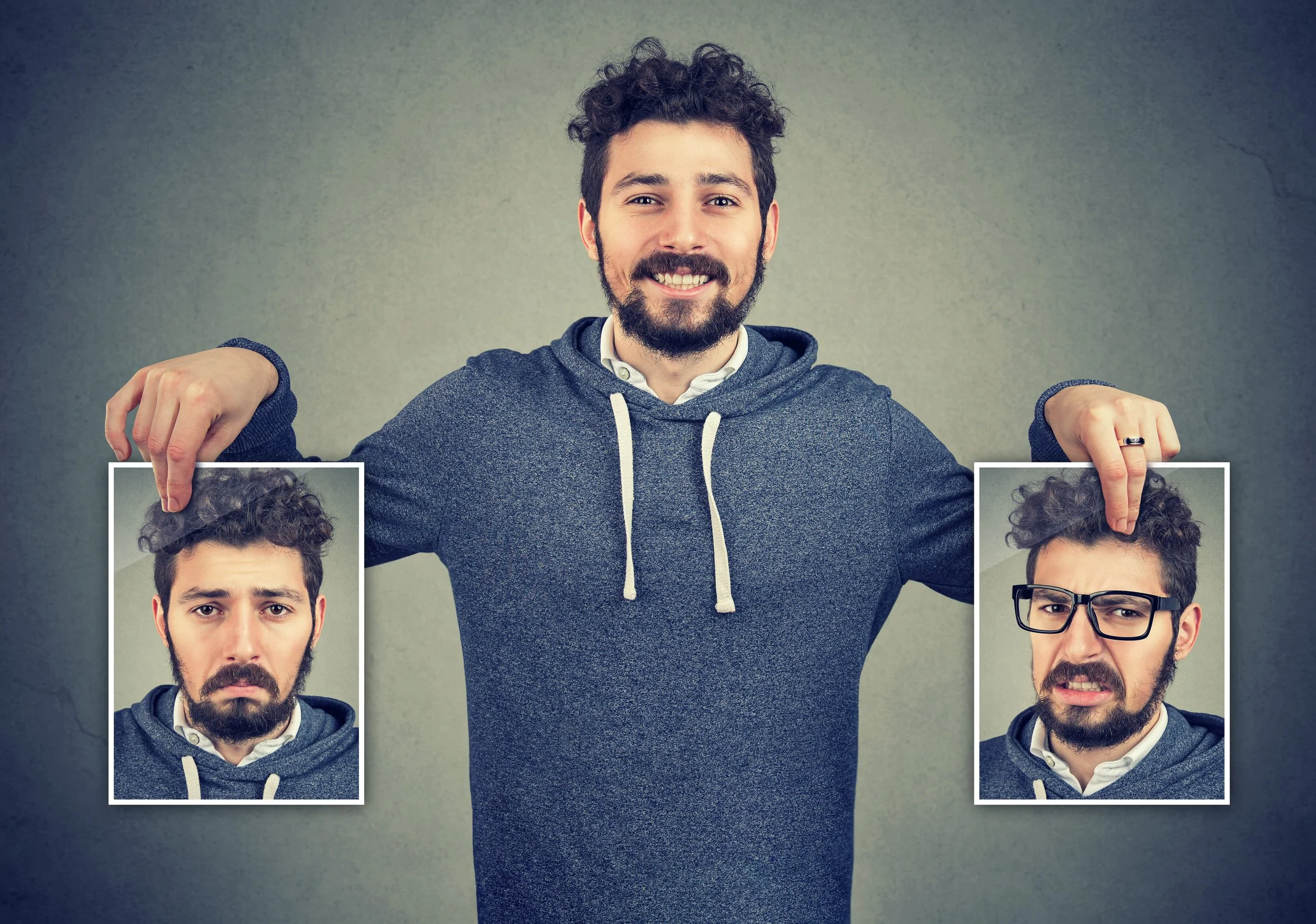
Somewhere between Logan Square and the Loop, a specific kind of sentence started appearing on Hinge profiles with suspicious regularity. "No BS, what you see is what you get." "Cubs or Sox, ask me and find out if we're compatible." "Looking for someone who can hang at a Wrigley rooftop and also have an actual conversation."
None of these sentences are false, exactly. They are also, increasingly, not written by the person whose photo sits above them.
Chicago has always taken a certain pride in being unimpressed by performance. This is a city that calls itself the Second City and means it as a compliment to its own scrappiness, not an insult; a city where "no BS" isn't a personality trait but closer to a civic value, inherited from a Midwestern directness that treats gloss with open suspicion. A Chicago dating profile was never supposed to read like a pitch. It was supposed to read like the person actually talking to you at the bar.
Which is exactly why AI has landed here as a genuine contradiction. Nationally, roughly three in four singles now say they've used ChatGPT somewhere in their dating life, with usage up more than 300% in a single year. In a city with a low share of Hinge users focused on long-term commitment relative to other major metros, and a dating culture that already prizes bluntness over polish, AI's core output — smooth, agreeable, conflict-free text — is close to the opposite of what the local market actually rewards. Chicago's whole self-image is built on seeing through a performance. AI has just given everyone the same performance to see through.
The optimised-beige problem, on a grid
Call it what it is: from Wicker Park to Hyde Park, everyone is starting to sound like everyone else, only with better punctuation and less of an edge.
Ask any sufficiently capable model to write "an engaging, no-nonsense dating bio for someone who lives in Chicago," and it will, with some irony, reach for the same handful of signifiers of authenticity — a beer league softball team, a strong opinion about deep dish, a joke about surviving winter, a line about being "low-maintenance" that is doing a great deal of unexamined work. It is not wrong, and it is not unpleasant. It is also, across a dense, direct dating market of roughly 12,000 people per square mile in the neighborhoods where most singles actually live, close to indistinguishable from several hundred other profiles reaching for the exact same markers of realness during the same L ride home.
This is the specific irony of AI arriving in a city this allergic to performance: the tool is, structurally, incapable of producing the thing Chicago claims to want most, which is a person who isn't trying too hard. An AI-generated bio is trying, by definition — optimized, smoothed, without the rough edge or the mildly ungenerous joke that a real Chicagoan might actually make. The result doesn't read as effortless. To a market this well-practiced at spotting a show, it tends to read as exactly what it is.
And Chicagoans, who take a certain civic pride in not being fooled, have started to notice. Roughly six in ten dating app users nationally now believe they've encountered AI-written messages; a majority say they'd lose interest in a match on learning the profile was AI-generated, even as most of them privately use the same tools. In a city where "no BS" is practically a personality type, that instinct for spotting the manufactured lands with more force, not less.
What the arms race is actually optimising for
It's worth being precise about the mechanism, because Chicago's version of the market makes the mismatch unusually visible.
A language model producing a bio for "single, late 20s, works downtown, lives on the North Side" is not describing a person. It is predicting the most statistically probable next word given every appealing North Side bio it has already been trained on — a pool that, at this point, includes thousands of other AI-assisted North Side bios written over the last winter alone. The output converges toward the center of a distribution, and the center of that distribution, in a city that prizes authenticity as a brand, ends up sounding suspiciously like a brand. The model isn't just averaging humanity. It's averaging Chicago's own idea of what unpretentious sounds like, until the performance of not-performing becomes its own recognizable genre.
This is precisely backwards from what actually lands in a market like this. Distinctiveness isn't noise to smooth out — it's the entire signal, and nowhere is that more true than in a city that has built its identity around telling coastal polish to get lost. The detail that's slightly too specific to have been generated — the actual name of the neighborhood dive, the very particular way someone survived a February here, the odd thing they'll admit to loving that has nothing to do with sports or beer — is the detail cutting through a scroll of several hundred profiles that all claim to be "no-frills."
What this reveals about the format, not the tool
The instinct is to treat this as a story about artificial intelligence. In Chicago specifically, it's really a story about what happens when a format built to compress a whole person into a photo and a punchline meets a tool that can manufacture the punchline for anyone, instantly, regardless of whether they're actually that funny.
The city's dating culture was built, long before any of this, around a lossy compression familiar to anyone who's tried to describe a friend to a stranger in one sentence: reduce a whole, specific person to a handful of relatable, unpretentious markers, then let someone judge the compression in the time it takes to finish scrolling on the Brown Line. AI hasn't introduced that failure mode. It has simply made "unpretentious" itself something that can be manufactured without any of the actual person's involvement — which is its own kind of pretense, dressed up as the opposite.
What doesn't optimise away
There's a reason this entire problem lives in the profile and disappears the second two people are actually sitting across from each other at a bar with a fireplace on a February night.
No model has learned to draft the specific, slightly ungenerous joke someone makes without thinking about it, or the real laugh instead of the typed one, or the moment someone's guard drops because the conversation has moved past the deep-dish opinion and onto something they didn't plan to say. That's not an artefact. It's behavior, produced live — and it's exactly the information a six-photo, three-prompt profile, however unpretentious it claims to be, was always trying and failing to compress.
We've hosted structured social evenings across Chicago's North Side, downtown, and beyond as part of more than 19,000 evenings run in 50+ cities since 2014, and if there's one thing this city in particular has confirmed, it's that no profile — AI-polished or hand-written, performed as effortless or genuinely effortless — has ever substituted for watching how someone actually responds to a real question, live, with the whole room around them. The bio was always a rough draft of a person. It becomes almost worthless once anyone with an app can manufacture the appearance of not trying without ever actually showing up as themselves.
The room doesn't have an optimised-beige problem. It can't. There's no prompt for the specific person across the table from you, three drinks into a real conversation, saying something that surprises you both.
Relish hosts structured social evenings for driven professionals across Chicago, and in 50+ cities in the US, UK, Canada and Australia, since 2014. Find an evening in Chicago →