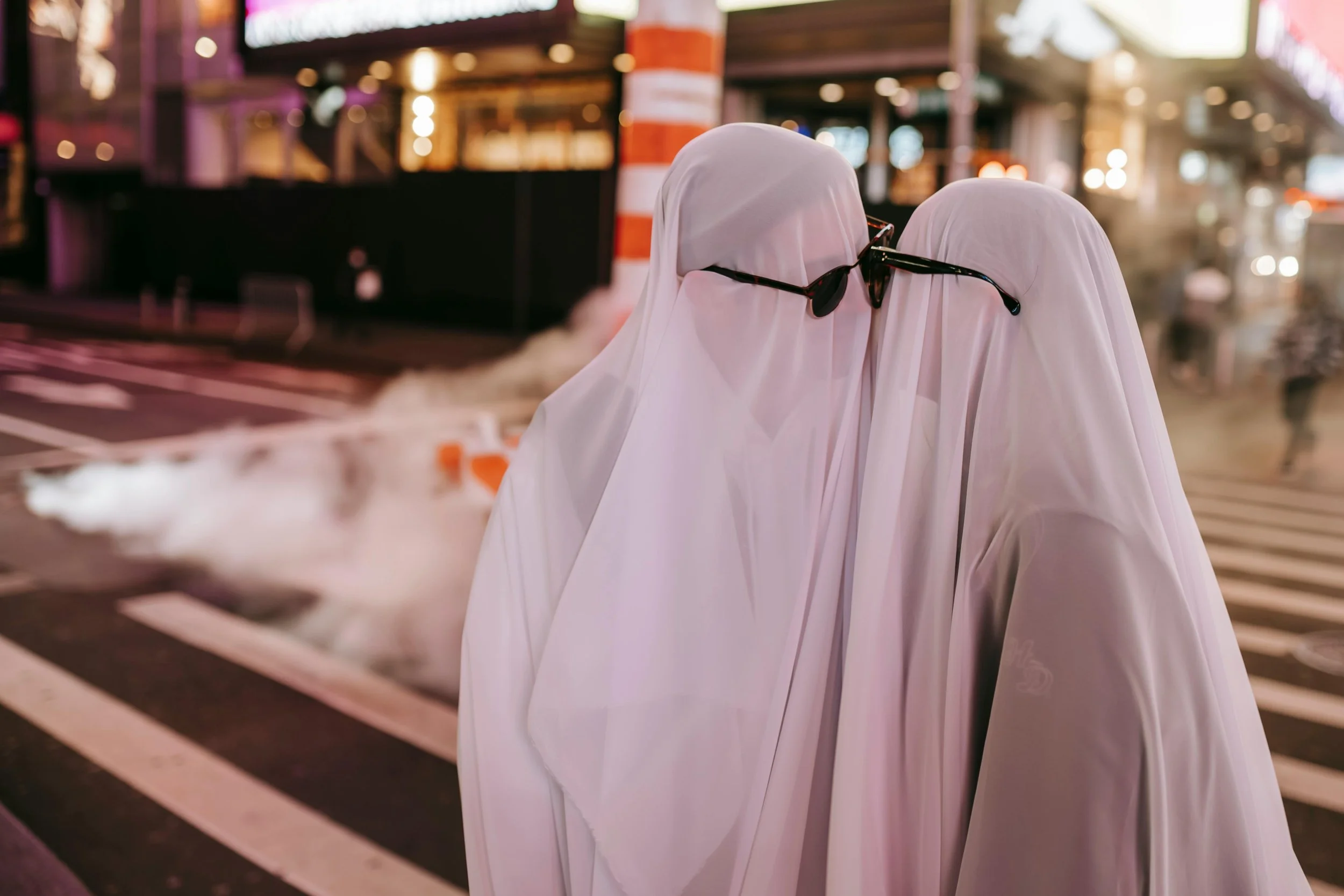
Dallas has a statistic that nobody leads with, because it does not fit the story people expect to hear about Texas.
Dallas does not break the top 15 most-ghosted cities in America. NumberBarn surveyed 1,500 residents across the 30 largest metropolitan areas on ghosting prevalence, and Dallas was not in the conversation. The polyamorous dating service Sister Wives — and yes, this is a real organisation that produced useful data — found that Texans search for ghosting-related content at far lower rates proportional to population than almost any comparable group. Dallas, the Dallas Observer cheerfully reported, may be better than the rest of the country at the basic courtesy of not disappearing on someone.
This is genuinely good news. It is also, in the specific Dallas context, approximately half the story.
Because Dallas does something in dating that may be harder to recover from than ghosting. Dallas shows up. It looks absolutely incredible. It orders something impressive from the menu. And then it says nothing real for approximately three months while you try to work out whether this is a relationship or a very elaborate social performance.
The numbers behind the polish
The DFW metroplex has 8.6 million people, making it the fourth-largest metropolitan area in the country. It has added more residents per year than almost any other major American city for the last decade — the corporate relocations, the tech sector, the finance professionals, the energy executives. Over 35% of DFW singles aged 28 to 45 say they are looking for a committed relationship, according to Pew and Bumble data. Hinge has seen a 22% increase in Dallas user activity year over year. Dallas ranks in the top five American cities for Bumble usage per capita.
And yet Texas ranks 45th out of 50 states in Spokeo's dating study. Dallas comes in at 90th nationally in WalletHub's dating-friendliness analysis. A Dallas matchmaker concluded that the city has a "real dating app problem" driven by a "vicious cycle of swiping, matching, low-effort conversations, and ghosting, which can turn some singles off from dating entirely."
So we have a city that does not ghost as badly as its peers, where 35% of daters genuinely want commitment, where app usage is among the highest in the country — and it is still ranking 90th nationally and 45th by state.
What is going on?
The polish problem, quantified
Dallas is a looks-first city in a way that even LA, the reigning looks-first city of American mythology, might find excessive.
Fox 25 specifically documented this: Dallas natives "put #1 stock into physical attraction" in ways that shape the dating culture at every level. The profile in Dallas is curated to a specific standard. The first date venue is chosen to signal wealth and taste. The outfit is considered with the specific care of someone who understands that in Dallas, the presentation is evaluated before the conversation, and the conversation is evaluated as a form of presentation.
The "30-thousand-dollar millionaire" — the Dallas professional who projects a lifestyle considerably more expensive than their actual financial position — is not a niche phenomenon. It is a recognised and locally named social category, which means it is common enough to require a name. When a city has coined a specific term for the person who is performing wealth at the expense of authenticity, that city has a cultural readout of what it values socially, and what it expects people to perform in order to belong.
The consequence for dating is the one we described in the city series: the signal becomes unreliable. When everyone is curating, when the date venue and the outfit and the order and the conversation topics are all being managed for impression rather than expression, the data you need to assess whether you actually like someone — who they are rather than who they are presenting as — is systematically withheld.
Dallas does not ghost you. Dallas shows up immaculately and gives you almost nothing to work with.
The 40-mile problem
The sprawl was always going to appear in this article because the sprawl appears in every Dallas article about anything that requires getting from one place to another.
8.6 million people across a metropolitan area that covers thousands of square miles, organised around the car and the freeway rather than transit. A match who lives in Frisco and works in Irving is, in practical social geography, in a different city from someone in Uptown. The driving distance from Uptown Dallas to Plano is over 20 miles. To Frisco, further. To the western suburbs, further still. And unlike New York's 42-minute subway, where the time cost is at least predictable, the Dallas drive is a function of the time of day, the day of the week, the construction status of the Tollway, and factors that no algorithm has reliably learned to incorporate.
"Driving distance is a dating filter," one Dallas dating guide put it plainly in 2026. "A match in Fort Worth might feel like a long-distance relationship to someone in Highland Park."
This is not exaggeration. It is a literal description of how Dallas singles evaluate romantic possibilities. The person on the right side of the highway might as well be in another market. The result is that the effective dating pool in a city of 8.6 million people is, in practice, determined by a radius that most people are willing to drive on a weeknight after work, which is considerably smaller than the metro's nominal scale would suggest.
And so the 30-thousand-dollar millionaire who looks perfect and says nothing real has been driving 35 minutes to get to this restaurant, which is an investment that further increases the pressure to make the evening look like it was worth the drive, which further increases the polish, which further decreases the authenticity.
What Dallas does instead of ghosting
Dallas's relative decency on ghosting rates is real, and it matters. The national figure — 74% of daters ghosted at least once, 84% of Gen Z and Millennials — is a baseline of social dysfunction that Dallas is measurably doing better than. The Midwestern-adjacent directness that Texas produces in its people, the Southern warmth that the city's social culture genuinely has underneath the polish, does show up in the follow-through metrics.
What happens instead of ghosting in Dallas is something that the data doesn't quite have a name for yet, but that everyone who has dated here recognises: the indefinite continuation of surface-level engagement. The pleasant follow-up text. The suggestion of a second date that arrives without a specific date or time. The sustained warmth that does not advance into anything. The specific Dallas mode of keeping the door open without walking through it — which is, in its own way, more cognitively demanding than either a relationship or a clean ending.
The 35% of DFW singles who say they want commitment are not lying. They want commitment. They also want to look great getting there, prefer venues that reflect positively on both parties, are navigating a geography that makes every dating investment genuinely costly, and have internalised a social culture that rewards the performance of success more reliably than the disclosure of self.
The result is a lot of very attractive, very pleasant, very indeterminate social encounters that do not quite convert into anything — which is, arguably, its own form of ghosting. Just slower. And with better lighting.
What changes when the format changes
The 22% Hinge growth. The Bumble top-five ranking. The rising matchmaking clientele. These are the data points of a Dallas that is recognising, with increasing specificity, that the performance mode and the app have not been producing the relationship that 35% of the population is explicitly asking for.
What the structured evening does in Dallas specifically — a Relish evening, in a Knox-Henderson venue that the person has driven to with genuine intention — is change the social contract from "let's both perform well" to "let's actually find out." The format makes the purpose explicit. The guest profile makes the seriousness legible. The private matching process removes the social risk of expressing genuine interest without the intermediary of looking good enough to justify it.
The Dallasites who show up at these evenings have, in most cases, already tried the other thing. The Uptown rooftop where everyone looked great. The Scottsdale-adjacent bar where the appearance-to-authenticity ratio was approximately ten to one. The dates that cost $150 and produced nothing to work with.
They are in the room because they want the conversation.
Dallas, underneath the polish, has always had exactly that.