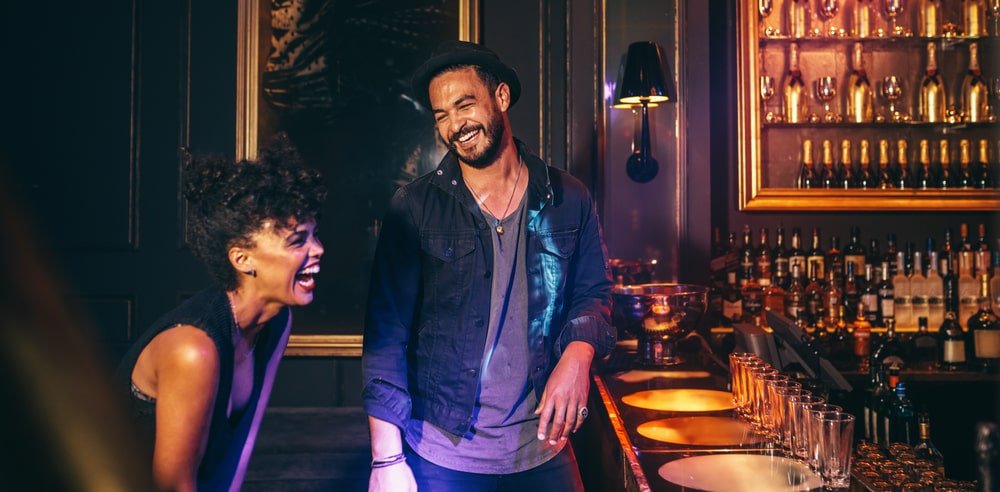
We have been hosting structured social evenings in Houston since 2014.
That is long enough to have watched this city from a vantage point that most cities never offer: the inside of thousands of rooms where its professional class has sat across from strangers and discovered, or not discovered, whether something was there. Long enough to have observed the specific qualities that Houston produces in its people — the qualities that the national conversation about this city rarely names because the national conversation about this city is still largely about what it lacks rather than what it has.
What twelve years of Houston evenings has shown us is primarily the latter. What this city actually has, and what it produces in the people who have chosen to build their lives here, is worth naming precisely.
Houston is the most genuinely warm room we host
This is the first and most consistent observation, and it requires a distinction.
Warmth, in the social sense, is not the same thing in every city. Chicago's warmth is community-rooted — the warmth of people who are accountable to their neighbourhood, who know their neighbours, who have invested in a specific place long enough to feel genuine affection for the people in it. Austin's warmth is cultural — the warmth of a city that has made openness and authenticity its stated values and has, at its best, actually practised them. Dallas's warmth is Southern in the specific Texas sense — direct, hospitable, genuine without being self-conscious about it.
Houston's warmth is something different from all of these. It is the warmth of a city that has absorbed people from every part of the world and, through the accumulated social practice of living alongside genuine difference for long enough, has produced a population that encounters strangers without the ambient guard that more homogeneous cities tend to maintain.
The Houston professional who has worked alongside colleagues from Nigeria, Vietnam, Mexico, Pakistan, India, and forty other countries; who has eaten in the strip malls on Bellaire and the East End and Hillcroft; who has navigated the specific social intelligence that a city of 145 languages requires — this person arrives at a Relish evening with a quality of openness to encounter that is, in our consistent observation, more readily available here than in any other city we host.
It does not mean the conversations go deeper faster. But it means the surface warms faster, and the depth, when it comes, tends to be genuine rather than performed.
The professional combination produces something specific
The observation we made in article one of this series about the energy-and-medical professional combination deserves its experiential elaboration here.
A Relish evening in Houston that draws from both the energy sector and the Texas Medical Center — which, given the city's professional geography, is most of them — produces a room with a specific conversational dynamic. The energy professional's relationship to complexity is systemic: they think in variables, in risk, in the long time horizons that geology and resource extraction demand. The medical professional's relationship to complexity is human: they think in individual cases, in clinical judgment, in the specific person in front of them.
When these two forms of intelligence encounter each other in a Relish room — which, in Houston, is structurally likely — the conversation tends to produce something that neither professional encounters in their daily working life. The energy executive who has spent the week thinking about macro-level systems meets the physician who has spent the week thinking about individual cases, and the conversation that follows is genuinely different from what either of them has in their professional context.
This is, in our observation, one of the most specifically Houston things that happens at a Relish evening. The city's concentration of these two professional cultures — adjacent but rarely overlapping in daily life, each producing a specific kind of intelligence — makes the cross-professional encounter more reliably interesting here than in cities with more homogeneous professional compositions.
The diversity dividend
The diversity statistic — 145 languages, no majority ethnic group — has a specific manifestation in a Relish room that the demographic data alone does not capture.
Houston produces people who are practiced at cultural translation. Not in the academic sense, but in the daily practical sense: the ability to read another person's social signals across cultural difference, to calibrate the pace and register of a conversation to someone whose background is genuinely different from your own, to find the specific thing that two people from very different places share without requiring that they share everything.
This is a form of social intelligence that is, in our experience across fifty-plus markets, more developed in Houston than almost anywhere else. The city has been practising it for decades, in every professional context and neighbourhood, and the people who have lived here long enough have absorbed the practice.
In a dating context, this intelligence is directly useful. The structured social evening is a format that asks guests to encounter strangers and find what is worth pursuing in a brief introduction. The Houston guest, practiced at cross-cultural encounter, tends to find the thread faster, to follow it with more ease, and to be less disoriented by the specifics of genuine difference.
The most interesting connections we have observed in Houston over twelve years have often been cross-cultural. Two people from different backgrounds who discovered, in a six-minute introduction, that the city they both chose had given them more in common than the distance between their origins would have predicted.
What the size produces
Houston's physical scale — 671 square miles, no meaningful transit, the car as the primary social infrastructure — creates a social dynamic that no denser city produces.
The guest at a Relish evening in Houston has, almost without exception, made a more deliberate decision to be there than the guest in any comparable city. The drive has been calculated, the parking has been arranged, the evening has been committed to in a way that walking out of a Midtown apartment to a bar three blocks away does not require.
This deliberateness is visible in the room. The Houston guest who has driven across the city to attend a structured social evening has already answered the question of whether they are serious. The drive is the first form of follow-through, and it tends to predict the quality of what follows.
What the size also produces — paradoxically — is a quality of isolation that makes genuine encounter feel more significant. In a city where the social geography separates communities into specific corridors and neighbourhoods, the experience of being in a room where those separations have been temporarily dissolved tends to produce a social openness that the more densely social cities, where everyone is always potentially anywhere, does not generate.
The person who drove thirty minutes to be in this specific room, at this specific time, with these specific people, tends to bring to the room the quality of intention that the deliberateness of the journey has produced. In our experience, that intention is the most reliable predictor of a good Relish evening in any city.
In Houston, it is almost guaranteed.
What the underrated city produces
The final and perhaps most Houston-specific observation from twelve years of evenings in this city is one that connects to article five's argument about the most underrated dating city in America.
The Houston professional who has lived here long enough to understand the city — who has found the strip mall restaurant on Bellaire and the gallery in Montrose and the farmers market in the Heights and the specific quality of a summer evening on the Buffalo Bayou hike-and-bike trail — has developed a relationship to place that is genuinely their own rather than performed or borrowed.
This relationship to place is, in our observation, one of the most attractive things a person can bring to a first conversation. It signals that they have looked at the city with genuine attention rather than through the lens of what it is supposed to be. It signals the capacity for the kind of considered engagement that finds something worth valuing where the broader world has failed to look.
The Houston professional who knows why the food in the strip mall is better than the restaurant with the nicer frontage has also, in some sense, demonstrated their capacity to find value where it is not obviously presented. This is not a small quality. It is, in the context of dating, exactly the quality that distinguishes the person who sees another person from the person who sees their profile.
Twelve years of Houston evenings have shown us, consistently, that this quality — the ability to look past the surface and find what is actually there — is more common in Houston than anywhere else we host.
Which may be why it is, quietly and without announcement, one of the best rooms we know.
Relish has hosted structured social evenings for driven Houston professionals since 2014. Browse upcoming Houston evenings →