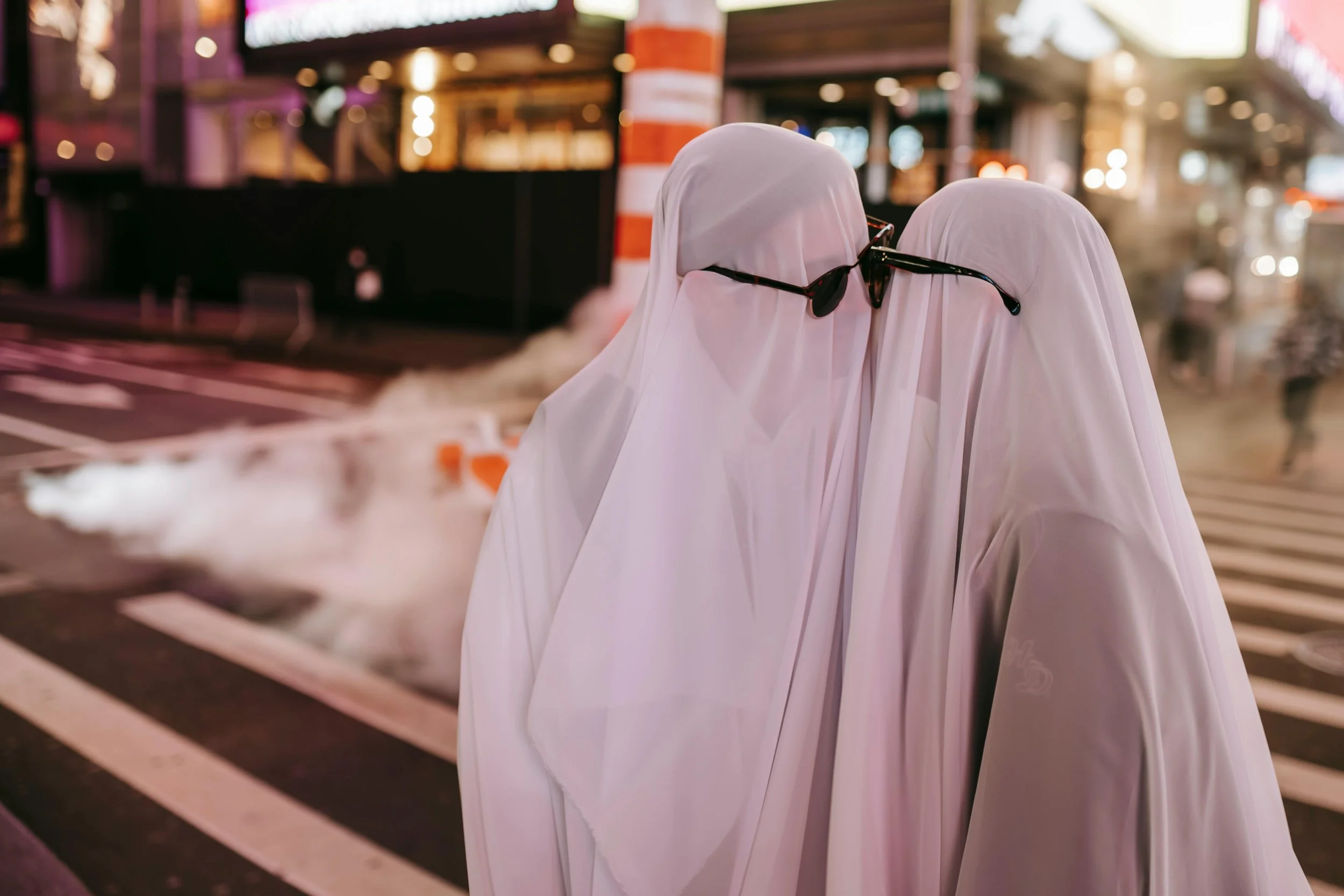
Los Angeles has a statistic that sounds like it was invented by a screenwriter for a movie about Los Angeles.
Men in this city are 549% more likely to ghost than the national average. Not 49% more likely. Five hundred and forty-nine percent. This comes from Match's data, not from a Reddit thread or a TikTok therapist. It is sourced, documented, and instantly recognisable to anyone who has dated here for more than a season. Austin men, the city we previously considered the ghosting capital of America, are 400% more likely to ghost than average. LA's men looked at that figure and more than doubled it.
But let us start from the beginning, because the beginning is also remarkable.
4.5 million singles in the greater Los Angeles area. 55% of the city's population is single — the second-highest rate of any major American city. The weather is, objectively, 284 sunny days per year. The social infrastructure is extraordinary: rooftop bars with views of the Hollywood sign, farmers markets in every neighbourhood, the beach at Santa Monica at 8am on a Saturday when the light is doing what it does and the entire city is out running, and hiking trails on Runyon Canyon and Griffith Park that produce more ambient encounters between attractive people than almost anywhere else in any American city.
On paper, Los Angeles is the greatest place on earth to be single.
In practice, 78% of its daters report burnout. The plan cancellation rate runs at 66%. And the men are 549% more likely to disappear without explanation than the national average.
What the traffic is actually doing
The commute problem in Los Angeles is different from New York's in every meaningful way. New York's 42-minute subway ride is a fixed variable — you know what it costs, you make the calculation, you either go or you don't. LA's traffic is not a fixed variable. It is a probability distribution ranging from twenty minutes to two hours for the same journey, with no reliable way to know in advance which you will be facing.
This is not a minor logistical detail. It is the central social fact of LA life that every other observation about the city follows from. The Silver Lake creative who matched with someone in El Segundo — eighteen miles on the map, forty-five minutes to two hours in practice depending on the day, the hour, the freeway, and factors that no algorithm has reliably learned to predict — is making a genuinely rational decision when she concludes that the uncertain time cost of the journey cannot be justified by the uncertain return of a first date with someone whose in-app conversation has been promising but not revelatory.
The date does not get cancelled because she is rude or uncommitted. The date gets cancelled because Los Angeles has constructed its geography in a way that makes every social engagement an investment decision, and the risk-adjusted return on a first date with a stranger is, in a city of four million alternatives, rarely obviously worth the traffic.
The 66% plan cancellation rate is not a character failing distributed across the city's dating population. It is the rational output of a city that decided to organise itself around the car and then generated a social life that requires the car to reach.
The looks-first problem
Los Angeles is, by wide consensus and its own candid self-assessment, a looks-first city. This is not unfair to say. The city's dominant industries — entertainment, fashion, fitness, wellness — have made physical presentation a professional currency in ways that do not apply in Houston or Chicago or Seattle. The gym culture is serious. The skincare is serious. The casual outfit that looks effortless required considerable effort.
What this produces in the dating context is a specific dynamic that the data bears out: dating profiles in LA are curated to a degree that produces choice paralysis rather than connection. Bios are short or non-existent because the photo is expected to do the work. People swipe on aesthetic and discover, repeatedly, that aesthetic alone is not enough to sustain a conversation, let alone a relationship. The match that looked perfect produces a first message that goes nowhere, which produces a conversation that reaches the planning stage and gets cancelled, which produces an experience that is then repeated across four million alternatives without the outcome improving.
"Profiles are curated to perfection," as one LA dating analyst put it with appropriate directness. "This creates a loop where users chase vanity metrics — likes, matches, followers — rather than real-world connection."
The city's beauty is real. The social performance of beauty has quietly become the obstacle to the genuine encounter that beauty was supposed to facilitate.
The ghosting capital of the Western world
Let us return to the number, because it deserves its own treatment.
549% more likely to ghost. The Match data also found that LA men are 400% more likely to breadcrumb — maintain just enough contact to keep someone interested without any intention of advancing — and 297% more likely to zombie: disappear entirely and then reappear weeks or months later as if nothing happened, usually via a text that reads "hey" sent at 10pm on a Tuesday.
To give those numbers texture: the national ghosting rate among app daters is already alarming — 74% of daters have been ghosted at least once according to BankMyCell research, and among Gen Z and Millennials specifically that figure rises to 84%. Two-thirds of those same people admit to having ghosted someone else. Nationally, ghosting has become so normalised that the Forbes Health survey of 5,000 daters found 76% had either been ghosted or done the ghosting. We have, as a culture, largely accepted disappearance as a legitimate form of ending a conversation.
Los Angeles has taken this national tendency and treated it as a floor rather than a ceiling.
The standard explanation for the city's extraordinary ghosting rates, which is correct as far as it goes, is optionality. In a city of four million singles, the person you ghosted can be replaced within the time it takes to reopen the app. The social cost of disappearing is approximately zero. The next option is always available, always pressing against the current one, always suggesting that something better is a swipe away. Why have the difficult conversation when you can simply not have it and open a fresh conversation with someone else instead?
What this explanation misses is the specific LA contribution to the dynamic, which is the entertainment industry's relationship to performance. LA has produced, across decades of cultural export, a social mode in which the presentation of possibility is more comfortable than the commitment to actuality. In the industry, everything is in development. Meetings happen constantly; decisions happen rarely. The pitch is more common than the greenlight. The callback is more familiar than the part.
This mode has migrated, with considerable efficiency, into the city's dating culture. The first date is the pitch. The match is the meeting. The ghosting is the industry's standard response to anything it isn't immediately certain about — which is to say, the standard response to most things. Not rejection, exactly. Not enthusiasm either. Just the silence that keeps all options open.
The situationship is more culturally legible in this city than the relationship precisely because the situationship is the entertainment industry's relationship to commitment applied to dating: perpetually in development, never quite greenlit, always maintaining the possibility of something without committing to anything.
And there is the secondary phenomenon that the data also captures but that rarely gets named directly: the LA dater who has been on the receiving end of the 549% enough times begins, rationally, to pre-ghost. To invest less in each match before the inevitable disappearance. To maintain the same provisional, non-committal register that the city's culture rewards, not because they want to but because matching the city's energy is the only strategy that doesn't hurt.
Everyone is ghosting. Everyone is being ghosted. Everyone is protecting themselves from the ghosting by becoming slightly more ghost-like. The number keeps climbing.
This is not cynical. It is structural. A city whose dominant industry is built on the premise that things might happen, that you might be discovered, that the next meeting could change everything, produces a social culture in which everything is kept provisional for as long as possible. Including Thursday.
What 78% burned out actually means
78% of LA daters report burnout. This is a national figure from Forbes Health, but LA tracks above the national average on every metric that produces burnout: match-to-date conversion that NBC Los Angeles specifically identified as lower than comparable cities, ghosting at nearly five times the national rate, traffic-driven cancellations at 66%, and the paradox of choice operating at maximum intensity in a city with four million options and ambient anxiety about whether any of them is the right one.
The burnout has a specific LA character. It is not merely exhaustion from swiping, which is universal. It is the exhaustion of a city that simultaneously produces and consumes the aspiration of connection more intensively than almost anywhere on earth — the romcoms, the dating reality shows, the wellness content about vulnerability and authenticity — while structurally making genuine connection genuinely difficult through traffic and geography and optionality and a cultural emphasis on keeping things casual that has calcified from a lifestyle choice into a social norm.
The Angeleno who is burned out is not someone who did not try. They are someone who tried very hard, in conditions specifically designed to make trying difficult, and eventually concluded that the conditions needed to change rather than the effort needing to increase.
What is actually different now
Here is the specific observation that the LA data buries beneath the burnout numbers: the shift is happening, and in LA it is happening specifically because the people doing the shifting are done with the provisional.
The run clubs in Silver Lake. The activity-based events that are 25% more likely to produce a second date than a drinks meeting. The matchmaking industry growth that reflects a professional class that has diagnosed the traffic and the ghosting and the image culture accurately and is choosing to pay for the friction to be removed rather than continue experiencing it themselves.
The Angeleno who arrives at a Relish evening in 2026 has, in almost every case, a specific and recent history with the alternative. They know what 549% more likely to ghost looks like from the receiving end. They have been cancelled on at 66% of the dates they have been excited about. They have matched with someone beautiful whose profile turned out to be a better version of the person than the person was prepared to be.
They have come to a room where the person across from them is also there, specifically, to not do any of those things.
In a city of four million alternatives, choosing to be present is the most distinctive choice available.
Since 2014, we have been hosting the room that makes it possible.