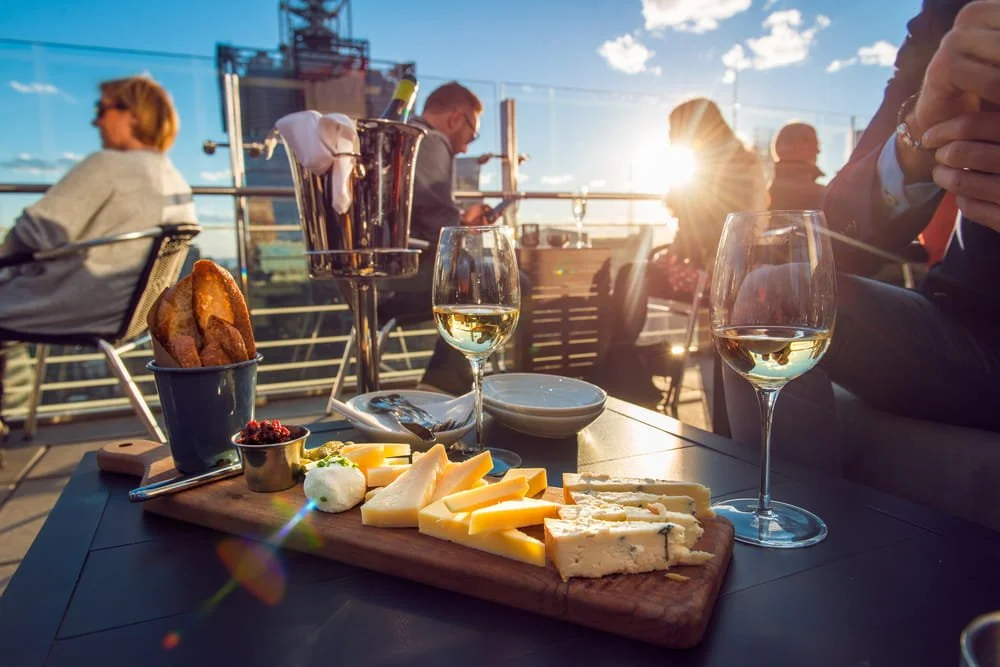
There is a specific hour in downtown Manhattan, somewhere between eight and nine on a weekday evening in late June, when the city earns every cliché ever written about it.
The light has gone amber. The sidewalk tables on Carmine Street are full. The corner at Bedford and Grove has that particular density of people who have somewhere to be and are not quite ready to be there yet. The West Village smells like basil and warm brick and someone's very good decision about where to have dinner. Across town, the Nolita streets — Elizabeth, Mott, Mulberry — are doing their own version of it: narrower, quieter, the cast-iron facades catching the last of the light, the restaurants so small and good that the conversation inside tends to spill out onto the sidewalk whether the tables do or not.
This is the hour when downtown New York becomes, however briefly, the most social city on earth. And for the 4.5 million singles navigating this city, it is also — more than any app, any algorithm, any deliberately curated profile — the hour when genuine connection becomes most possible.
What the downtown corridor does that no other geography replicates
The triangle formed by the West Village, SoHo, and Nolita is, in summer 2026, the most concentrated zone of social possibility in New York. Possibly in any city.
This is not about nightlife in the conventional sense — the loud venues, the bottle service, the deliberately anonymous spaces designed for a different kind of evening. It is about something more specific and more useful: the density of small, excellent restaurants and bars on human-scaled streets, in neighbourhoods that attract people who have made deliberate choices about how they live and what they value, creating the conditions under which genuine social encounter becomes structurally more likely.
Balthazar on Spring Street remains what it has been for nearly three decades — a brasserie that functions as a kind of civic institution, a room where the density of interesting people at any given hour reaches levels that seem almost improbable until you're sitting in it. The bar at Employees Only on Hudson Street, consistently ranked among the world's best, has its own social physics: the craft cocktail seriousness, the unpretentious warmth, the particular quality of a room where the bartenders genuinely know what they're doing and the patrons respond to that by being slightly more themselves than they would be elsewhere. Minetta Tavern on MacDougal — try booking on less than six weeks' notice, on any evening that isn't 5pm or 10pm — is, on a summer evening with the doors open and the room full, one of those specific New York experiences that reminds you why you live here.
Nolita operates differently from the West Village — more intimate, more neighbourhood-feeling, the streets narrow enough that the social membrane between the restaurant and the street is effectively nonexistent. Estela on Houston, where the bar seats are a more reliable social proposition than the tables. The new Oriana on the edge of Nolita, already earning its reservation difficulty. The kind of place where the people sitting next to you at the bar are interesting by self-selection, because the room is too considered for it to be otherwise.
The social geography of a summer evening
A 2025 Thriving Center of Psychology survey found that 68% of New York City singles prefer attending curated in-person gatherings over using traditional dating apps. The preference is clear. The challenge, consistently, is infrastructure — the gap between knowing that real-world social contexts work better and having a reliable means of accessing them.
What downtown Manhattan offers in summer is the closest thing the city has to ambient infrastructure for this. The neighbourhoods are walkable, which matters more than it sounds — the ability to move between the bar where you started and the restaurant two blocks away where the conversation continues is the kind of social fluency that changes how an evening develops. The guest profile in these neighbourhoods is, by the self-selecting logic of rent levels and restaurant choices, broadly consistent: professionals, creatives, people who have chosen to live or spend time somewhere that requires both resources and intention.
The East Village adds its own register — the Employees Only alumni bar scene, the newer Penny on East 10th with its pristine raw bar and marble counter, the particular energy of First Avenue on a Thursday evening when the week is almost over and everyone has decided it already is. The streets running between Avenues A and B at dusk in late June are doing something the rest of the city rarely achieves: they feel both urban and intimate simultaneously.
Tribeca at this hour is quieter, more considered. The neighbourhood's conversion from warehouses to some of the most expensive residential addresses in the city has produced a social scene that matches: smaller, more curated, the restaurants and bars chosen by people who know exactly what they want and have the resources to insist on it. Chambers on the edge of Tribeca, with its market-driven menu and wine list that rewards attention, is the kind of room where a conversation about what you're drinking becomes a conversation about something else entirely, which is precisely when evenings become worth remembering.
What all of this has to do with meeting someone
The research is consistent on one point that downtown Manhattan embodies almost accidentally: genuine connection requires the right environment, and the right environment is one in which social engagement is the natural activity rather than the background noise.
A 25% year-over-year increase in in-person event attendance among New York singles reflects something real — the recognition that the ambient social richness of downtown Manhattan at 8pm on a summer evening is not reliably converted into genuine introduction by luck alone. The room has to be right. The structure helps. The guest profile matters.
What Relish evenings have always done is take the best qualities of this environment — the considered venue, the social density, the calibre of guest — and add the one element that the ambient downtown social scene cannot provide: a format that makes the introduction happen rather than leaving it to the variables of who happens to be sitting next to whom and whether either of them decides to say something.
A Relish evening in a West Village or Flatiron venue this summer is the overlap between everything that makes downtown New York extraordinary after eight and everything that makes a structured social evening work. The city is doing its part. The format handles the rest.
Since 2014, some of the evenings we remember most clearly from New York happened in rooms not unlike the ones described above — small, well-chosen, full of people who had made a deliberate decision to be there. The city outside was doing what it always does in June. Inside, two people were having a conversation that was going somewhere.
Relish hosts structured social evenings for driven professionals across New York City. Browse upcoming NYC evenings →