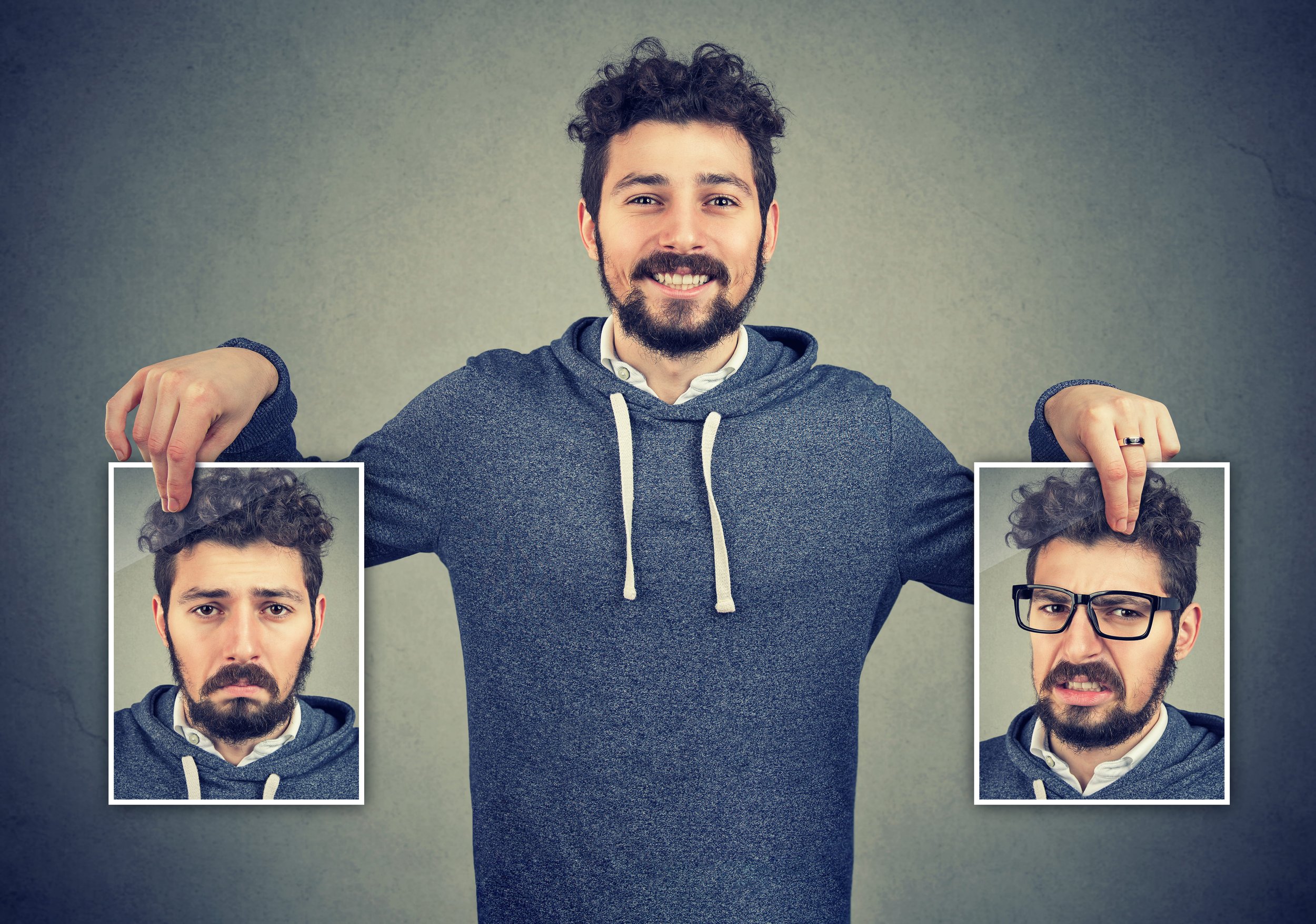
Somewhere between Dupont and Capitol Hill, a specific kind of sentence started appearing on Hinge profiles with suspicious regularity. "Policy by day, still trying to have a personality by night." "Working on the Hill, but I promise I have hobbies." "Looking for someone who won't ask what committee I'm on within the first five minutes."
None of these sentences are false, exactly. They are also, increasingly, not written by the Hill staffer, the associate, or the program officer whose photo sits above them.
Washington has a dating problem most cities don't have to think about, because most cities aren't built almost entirely out of people with a résumé to defend. Government, policy, law, and consulting are wildly overrepresented in the local workforce compared to nearly every other US metro, and everyone here already knows it. The city figured out years ago that leading with your agency, your degree, or your think-tank fellowship is exactly the wrong move on a dating app — the profiles that actually get a response are the ones that work hard to prove there's a real person behind the badge. A DC dating profile was never supposed to read like testimony. It was supposed to read like the version of you that shows up after the hearing ends.
Which is exactly why AI has landed here as a genuine step backward. Nationally, roughly three in four singles now say they've used ChatGPT somewhere in their dating life, with usage up more than 300% in a single year. But a language model asked to write a dating bio defaults, structurally, toward exactly the register DC spent the last decade learning to avoid: composed, credentialed, faintly institutional, allergic to risk. Ask it to describe someone specific and funny, and it will often hand back something that reads like a briefing document with a joke bolted on. In a market that has already priced in the cost of sounding like your own LinkedIn, AI is quietly reintroducing the exact failure mode the city had finally trained itself out of.
The optimised-beige problem, dressed for a hearing
Call it what it is: from Shaw to the Capitol Hill rowhouses, everyone is starting to sound like everyone else, only with cleaner syntax and a more polished opening line.
Ask any sufficiently capable model to write "an engaging, personable dating bio for someone who works in policy or law in DC," and it will reach, with impressive consistency, for the same handful of moves — a self-deprecating line about the job, a mention of a hobby positioned to prove there's more going on, a carefully hedged sense of humor that never quite commits to being funny. It is not wrong. It is also, in a city already full of people trained by years of professional writing to sound composed and defensible, close to indistinguishable from several hundred other profiles hedging in exactly the same way during the same scroll on the Red Line.
This is the specific bind DC finds itself in: the entire local dating market has already adapted around the insight that competence-signaling doesn't work here, because everyone already has competence to signal. AI, trained to produce broadly appealing, low-risk, professionally safe text, is not built to take the kind of specific, slightly exposing risk that actually reads as a real person in a city this fluent in institutional voice. It doesn't just fail to solve DC's dating problem. It actively regresses toward it.
And DC singles, a large share of whom read carefully worded documents for a living, have started to notice the pattern. Roughly six in ten dating app users nationally now believe they've encountered AI-written messages; a majority say they'd lose interest in a match on learning the profile was AI-generated, even as most of them privately use the same tools. In a city whose entire professional culture is built on detecting exactly what a document is trying to avoid saying, that instinct doesn't need much sharpening.
What the arms race is actually optimising for
It's worth being precise about the mechanism, because DC's professional culture makes the mismatch unusually easy to see.
A language model producing a bio for "single, early 30s, works on the Hill or in policy, lives near Dupont" is not describing a person. It is predicting the most statistically probable next word given every appealing DC-professional bio it has already been trained on — a pool that, at this point, includes thousands of other AI-assisted bios written by people from the same handful of feeder universities, in the same handful of industries, over the last eighteen months. The output converges toward the center of a distribution that was already narrow, because DC's workforce is unusually homogeneous by industry even as it's constantly turning over by person. The model isn't just averaging humanity. It's averaging institutional caution, and calling the result a personality.
This is precisely backwards from what actually works here. Distinctiveness isn't noise to smooth out of a bio — it's the entire signal, and DC of all cities should recognize the difference between a genuinely revealing detail and a carefully hedged one, because reading the difference is half of what the local job market pays people to do. The detail that's slightly too specific and slightly too unguarded to have been generated — the actual reason someone left their last job, the hobby that has nothing to do with policy, the honest admission that they're tired of talking about politics on a first date — is the detail cutting through a feed of several hundred profiles that are all, in their own way, still speaking for the record.
What this reveals about the format, not the tool
The instinct is to treat this as a story about artificial intelligence. In DC specifically, it's really a story about what happens when a market that had finally learned to reward vulnerability meets a tool engineered to avoid it.
The city's dating culture was built, long before any of this, around a lossy compression familiar to anyone who's ever cleared a quote with communications before sending it: reduce a whole, specific, occasionally risky person into a safe, appealing, defensible version of themselves, then let a stranger judge the compression in the time it takes to scroll past. AI hasn't introduced that failure mode. It has simply made the safe, defensible version available to everyone instantly, at the exact moment the local market had started rewarding people willing to be a little less safe.
What doesn't optimise away
There's a reason this entire problem lives in the profile and disappears the moment two people are actually sitting across from each other at a coffee shop in Shaw with no committee in the room.
No model has learned to draft the specific, mildly risky thing someone says when a question catches them off guard and they answer honestly instead of diplomatically. Nobody has automated the pause before someone admits something true instead of something safe, or the moment a conversation stops sounding like testimony and starts sounding like two actual people. That's not an artefact. It's behavior, produced live, under conditions nobody can rehearse for — which is exactly the information a six-photo, three-prompt profile, however carefully worded, was always trying and failing to compress.
We've hosted structured social evenings across DC as part of more than 19,000 evenings run in 50+ cities since 2014, and if there's one thing this city in particular has confirmed, it's that no bio — AI-composed or hand-written, hedged or genuinely honest — has ever substituted for watching how someone actually answers a real question, live, without the chance to clear it with anyone first. The profile was always a rough, defensible draft of a person. It becomes nearly worthless once anyone with an app can generate the safe version without ever risking the honest one.
The room doesn't have an optimised-beige problem. It can't. There's no prompt for the specific person across the table from you on a Thursday evening, off the record, saying something true instead of something safe.
Relish hosts structured social evenings for driven professionals across Washington, D.C., and in 50+ cities in the US, UK, Canada and Australia, since 2014. Find an evening in DC