Ask a driven professional to evaluate almost any other investment of time and money, and they will default to the same handful of questions: What's the input cost? What's the expected return? What's the variance? Dating is the rare category where the same people suspend all of that, and then wonder why the numbers don't work out.
It's worth running the actual math.
The hidden cost of the current default
The default mode of dating for most professionals is the app. It looks free. It isn't.
A typical active user spends five to ten hours a week swiping, messaging, and coordinating first dates: conservatively, 300+ hours a year. Add the first dates themselves: industry estimates put the average match-to-date conversion rate at under 10%, meaning most of that time produces no date at all, just screening.
Run that at a professional's own hourly rate, even a conservative one, and the "free" app is quietly one of the more expensive things in their calendar: a significant annual spend, in time-cost terms, for a return most would rate as poor.
That's not a knock on apps as a category. It's a description of an unpriced cost that professionals would never accept in any other part of their life without asking for a better structure.
What a structured evening changes
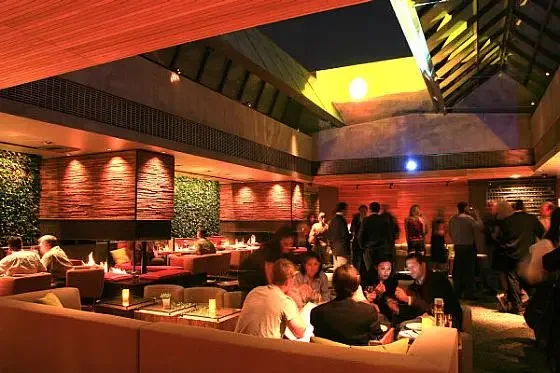
A curated, in-person evening compresses the same objective, meeting people worth knowing, into a fundamentally different cost structure.
Time. One evening, roughly two hours, produces multiple in-person conversations that would otherwise take weeks of asynchronous messaging to reach — if they got there at all. The screening happens before the room, not during it.
Signal quality. In-person conversation surfaces the things a profile can't: how someone actually listens, how they handle a lull, what they're like under mild social pressure. Across Relish's own data (19,477+ verified events since 2014), most guests report knowing within minutes whether a connection is worth exploring further. That's not a claim about chemistry; it's a claim about how fast good information arrives when the format is right.
Downside protection. Every guest at a curated evening has been through the same verification and standard of conduct. That doesn't guarantee a match — nothing does — but it removes the tail risk that eats disproportionate time and attention in the open-app market: the profile that isn't who it claims to be, the conversation that goes nowhere for reasons that had nothing to do with compatibility.
The comparison, stated plainly
Open app marketCurated eveningTime to first real signalDays to weeks of messagingMinutes, in personWeekly time investment5–10 hours~2 hours per eveningScreeningSelf-managed, ongoingDone in advanceVarianceHigh, volume-dependentLower — quality-controlled room
The app model optimizes for volume and pushes the cost of filtering onto the user, indefinitely. The curated model front-loads the filtering and prices the time honestly, in a single evening.
Why this matters more for senior professionals specifically
The math skews further in favor of structure the more expensive someone's time gets, which is precisely the population least likely to have budgeted for how much of it dating already consumes. For a founder, partner, or physician working a 60-hour week, the constraint was never a shortage of interested people. It was a shortage of screened time. A curated evening doesn't ask for more of a scarce resource; it asks for a better-designed two hours instead of an ongoing, unbounded one.
The bottom line
Professionals don't think in "luck" or "fate" for anything else they invest in. There's no reason dating should be the exception. Run it as what it actually is — a time-cost decision with a measurable return, and the case for a well-designed room over an unbounded inbox stops being a preference. It's just the better trade.
Relish — Elevated, structured social evenings and curated introductions for professionals who move with purpose.